The consultation booking path
Search brings somebody to a page. Everything after that is a different discipline, and it is where most of the value is won or lost.
PrerequisitesModule 10 · Treatment page anatomyModule 12 · Price
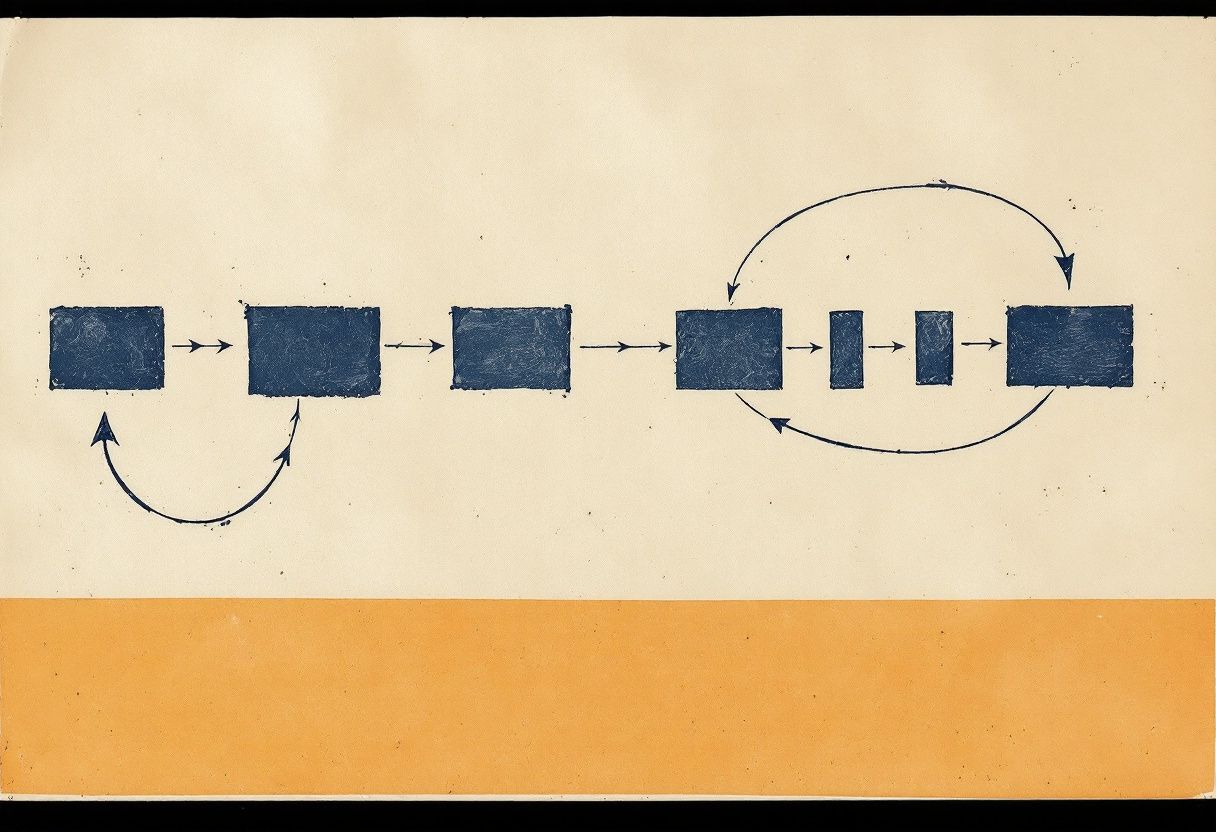
The booking path has six steps: the page is read, an enquiry is made, a reply is sent, a consultation is booked, it is attended, and treatment is agreed. Clinics lose most people between the first and the third, which is a response-time and enquiry-design problem rather than a search problem. Speed of reply is the single largest controllable factor in the whole path.
What you will be able to do
By the end of this module you will be able to:
- Map your own booking path and find where people are lost.
- Measure and improve response time to enquiries.
- Reduce the number of people who attend a consultation with the wrong expectation.
- Decide what belongs on the page and what belongs in the conversation.
Six steps, two doors
Search work delivers somebody to step one. Everything after that is the clinic's own process, and a clinic with excellent pages and a poor process is paying for attention it then discards.
Two of the six steps account for most of the loss. The first is the step from reading to enquiring, which is a page and form design problem. The second is the step from enquiring to receiving a reply, which is purely operational and is the one most clinics have never measured.
The page to enquiry step
Four things make this step wider, all of them covered elsewhere in the course and all of them worth repeating here because they are conversion changes rather than search changes.
- A price range, from Module 12, Price, and what you may say about it. A reader who cannot form an expectation does not enquire, they leave to find one.
- A named practitioner, because an enquiry is a message to a person, and an anonymous clinic is harder to write to.
- The unsuitability section, from Module 13, Risks, suitability and aftercare, which paradoxically increases enquiries because it establishes that you will say no.
- A short form, which is the whole of Module 30, Enquiry forms, phone and messaging.
What does not widen it: more prominent buttons, more of them, urgency language, or a chat widget nobody staffs. Each of those has been tried extensively across the sector and each addresses willingness rather than the reasons for hesitation.
Response time
An enquiry about an elective medical procedure is made in a moment of resolve, and resolve decays. A reply within the hour reaches somebody who is still thinking about it. A reply the next afternoon reaches somebody who has since read three other clinics' pages.
Most clinics have never measured their own response time and are surprised by it when they do. The measurement is simple: for the last twenty enquiries, the time between arrival and first substantive reply. Not an automated acknowledgement, which is not a reply.
If you do one thing from Part VII, measure your response time. It is the cheapest improvement available and almost nobody has looked at it.
The consultation itself
The consultation is where the judgement described in Module 01, What an aesthetic clinic actually sells is delivered, and it is the only part of the path where the clinic has the patient's full attention. Two things about it belong in a search and content course.
First, what the patient expects from it should be stated on the page: how long it lasts, what it costs, whether it is with the person who would perform the treatment, and whether treatment can happen on the same day. Every one of those is a question patients ask and few clinic sites answer.
Second, the consultation is where you find out what your pages failed to explain. Every misconception a patient arrives with is a page you can improve, which is why Module 15, Finding the questions patients actually ask asks you to record the questions asked.
Reducing wasted consultations
A consultation with somebody who was never suitable costs an hour and disappoints two people. The pages are the filter, and a good filter increases the proportion of consultations that lead somewhere while reducing the raw number.
Clinics are frequently reluctant to filter, on the reasonable-sounding grounds that a consultation is a chance to persuade. In practice the patients filtered out by an accurate unsuitability section and a published price range were not going to proceed, and the hour spent on them was taken from somebody who would have.
The measurement that matters here is the proportion of consultations that result in a booked treatment, tracked over time. If it falls while enquiry numbers rise, your pages are attracting the wrong people, which is a content problem with a search cause.
Where to spend the effort
Rank the six steps by how many people you lose at each, then work on the largest. This sounds obvious and it is routinely ignored in favour of working on whichever step is most enjoyable to work on, which is usually the pages.
For most clinics the order comes out the same way: response time first, because it is free and immediate; the enquiry form second, because it is a morning's work; then the page changes, which take longer and depend on the writing modules; and only then anything else. Module 31, What to measure, and what to ignore gives you the numbers to do this ranking properly rather than by impression.
Measure the path
An hour with your enquiry records open. Nothing here requires a tool you do not have.
- Take the last twenty enquiries. For each, record the time it arrived and the time of the first substantive reply. Calculate the median.
- Of those twenty, count how many became a booked consultation, how many attended, and how many proceeded to treatment.
- Write the six numbers down. This is your booking path.
- Identify the largest single loss between consecutive steps.
- Write one change you will make this month to widen that step, and one measure that will tell you whether it worked.
- Diarise a repeat in three months using the next twenty enquiries.
Twenty is enough to see a pattern and small enough to do by hand in an hour. Resist building a dashboard; you will not maintain it and it will not tell you more than this.
Questions readers ask about this module
What is a good response time?
Faster than yesterday, and the direction matters more than any published benchmark, most of which are invented. What is clear is that same-day replies reach people who are still deciding and next-week replies frequently do not. Measure yours and improve it.
Should I use an automated reply?
As an acknowledgement that sets an expectation, yes, and it is not a substitute for a real reply. An automated message saying somebody will respond by a stated time is useful. One that pretends to be a person is not.
Is a chat widget worth it?
Only if it is staffed during the hours it is shown. An unstaffed widget is an unanswered message and a performance cost, as Module 21 explains. If nobody can answer within minutes, remove it and put a telephone number there instead.
How do I track this without expensive software?
A spreadsheet and twenty rows, three times a year. The measurement in this module is deliberately manual because manual measurements get looked at and automated ones get ignored.
Sources and primary references
Disclosure. This module contains no commercial links of any kind. This course is independently published, is free to read, and is funded by the workbook pack and by clearly labelled series sponsorship. We do not rank, review or recommend agencies or clinics.
Module 29 of 32